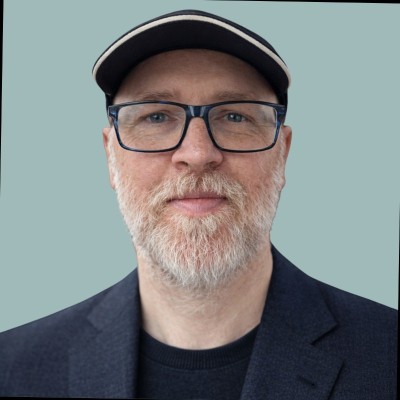
For about twenty years I knew I was capable of more than I was doing. I had the ideas. I had 30-odd years in IT behind me. What I didn't have was the bit in the middle — the bit between knowing what to do and actually finishing it.
Turns out I've got an ADHD-pattern brain. High on the fact-find. Brilliant at the quick start. And not great, if I'm honest, at the follow-through. For years I thought that was a character flaw. So I did what a lot of us do — went to the event, felt pumped, came home, bought the next course, and quietly went back to old patterns. Round and round. I call it the oscillation loop, and it was the enemy.
Then AI landed properly, and something clicked. Not because it's magic — I smell B.S. on most of the hype — but because, set up right, it does the one thing I could never reliably do alone: it closes the gap between knowing and doing. It holds the thread when my attention wanders. It's the scaffold. For a brain like mine, that's not a productivity hack. It's genuinely a superpower.
Some people always knew what they wanted to do — they just could never follow through. The ideas were there; the execution never landed. That's the gap AI closes: it does the fact-finding and the follow-through, so intention finally becomes implementation.
The red kite is my symbol for that — freedom. A flock of them showed up when I lost my job, and the closer they fly to home the more they feel like a sign. Not freedom just for me — freedom for others, through AI.
But here's the thing I learned the hard way: it only works when it's built around you. Most AI advice is written for some imaginary tidy-minded person who does everything in order. That person isn't me, and I'd bet they're not you either. So I stopped fighting my wiring and started building AI around it. That's the whole idea behind the Signal Stack — and behind everything here.